 In 1943, Swami Tyagishananda started Sri Ramakrishna Vidyarthi Mandiram with a single underprivileged student. It quickly grew to five students who were housed in an old room next to the Ashrama cowshed. There was no grand campus or elaborate infrastructure yet. There was only the conviction, shared by the monks of Ramakrishna Math, Basavanagudi, that every young man deserves a chance at an education that builds both career and character.
Eighty-three years on, that seed of conviction has grown into a thriving residential institution housing 100+ students, guided by the philosophy: education is incomplete unless it also builds strength of mind, discipline, and a life dedicated to service.
Ours is a “Modern Gurukula” whose methods have evolved with the times while our foundation remains the ancient ideal of ‘Guru-gṛha vāsa‘: living, learning, and growing under the guidance of dedicated mentors, in a home built around shared values.
When 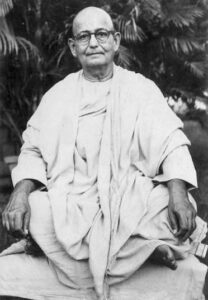 came to Bangalore in 1951 as President of Sri Ramakrishna Ashrama, the Vidyarthi Mandiram was already running, but there was not enough space for everyone. The late Dr. Narayana Rao had generously offered his building and property on Bull Temple Road for the Mandiram’s use. However, some students still had to stay inside the Ashrama itself, in a hall that also hosted weekly Saturday and Sunday discourses. Every weekend, they’d move their belongings into a corner to clear the space.
It was not easy for anyone. But it did mean these students saw Swami Yatiswarananda often, as he would come upstairs to ask how they were doing, stop for a word when he passed them, or see them playing. “Boys should have a better place to stay,” he’d say. It stayed on his mind enough that he decided to do something about it.
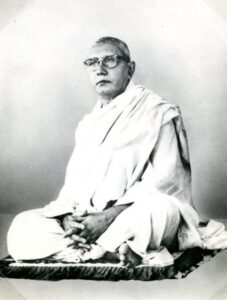
Swami Madhavananda, then General Secretary of the Ramakrishna Mission, laid the foundation stone for the current building. Mysore University helped with funding, but the rest had to be raised by the Ashrama itself. Swami Yatiswarananda used to visit the site regularly and check on the details himself, even reminding the engineer, “See that all the rooms get enough ventilation.” He told Swami Ritatmananda, the Mandiram’s first Warden, “Let us serve Him till our last breath.” He treated the work, plainly, as something worth doing well.
Once the building was ready, the Mandiram could take in far more students, from about 35 to 90. He liked showing visiting monks around in the evenings: “You must go and see where our boys stay.“
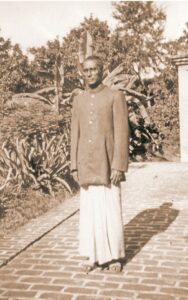 From the start, the Mandiram housed both fully sponsored and paying students together under the same rules. This is something that hasn’t changed. As the Mandiram grew, the new building eventually housed close to 100 students, with its own shrine, outdoor theatre, library, and gymnasium. Over time, that expanded further to include computers and other learning resources.
The Mandiram was always meant to augment what students learned in college and help them grow physically, intellectually, morally, and spiritually, under a Warden who is a monk of the Ramakrishna Order.
In 1945, the Ashrama also started tutorial classes to help students prepare for their SSLC exams, run by Mandiram students and volunteers, which continued until 1952.